Recycling and Sustainability for Flat Clearance Services
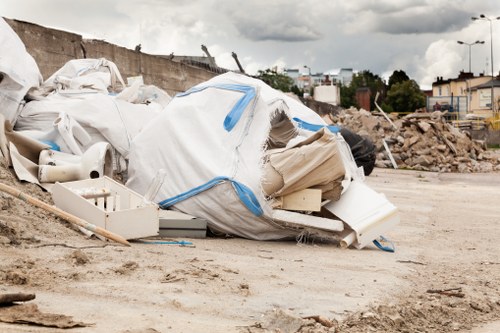 Our flat clearance sustainability policy is built around a simple principle: clear spaces with care for the environment. Whether you book a full flat-clearance service or a selective apartment clearance, we prioritise reuse, responsible recycling and low-carbon transport. This page outlines our recycling goals, local transfer station networks, charity partnerships and the practical steps we take to reduce the carbon footprint of every job.
We set a measurable recycling percentage target to guide day-to-day operations and long-term planning. Our current objective is to recycle or repurpose 85% of materials recovered from flat clearances within five years, with a stretch goal of 90% by 2030. These figures are based on material streams typical to urban flats ??? timber furniture, mattresses, white goods, small electricals (WEEE), textiles and mixed construction debris ??? and are tracked through quarterly diversion reports.
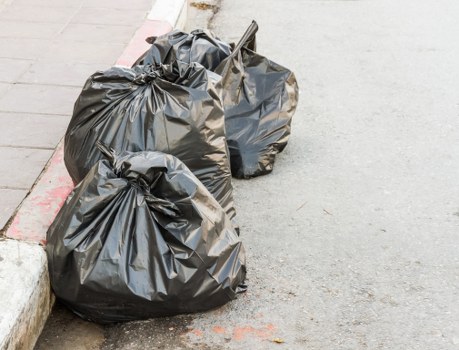 Local transfer stations and waste transfer depots are an essential part of achieving high diversion rates. We work with several borough transfer hubs and independent depots to move segregated materials quickly to the right destination. Typical transfer locations we use include:
- Southside Transfer Station ??? for segregated wood, metal and bulky household items
- Riverside Transfer Hub ??? specialist handling for mattresses and foam products
- Northfields Depot ??? consolidated sorting before onward recycling or donation
Partnerships with Charities and Reuse Organisations
Our flat clearance teams maintain close partnerships with local charities and reuse networks. Rather than defaulting to landfill, we triage items on-site ??? evaluating condition, safety and reuse potential ??? and divert viable goods to charitable partners who refurbish furniture and household items for community redistribution. Common partners include furniture banks, community centres and social enterprises that accept working white goods, mattresses that meet safety rules and good-condition soft furnishings.
To keep the process transparent and effective we use a defined donation protocol: items suitable for reuse are logged, photographed and transported under dedicated loads. We never send reusable furniture to disposal facilities when a charitable route is available. Many boroughs have distinct bulky waste collection routes and donation schemes, and our clearance teams align with those schedules to maximise reuse.
![A large stack of wooden pallets arranged in an outdoor area on a paved surface, with some pallets leaning against a grey brick wall and others neatly stacked. The pallets are natural light-colored, showing their rough wood textures, with some displaying visible nails and weathering marks. In the foreground, a few smaller pallets lie on the ground, and a metal fence with horizontal bars can be seen in the background. The scene is well-lit, likely during daytime, highlighting the textures and details of the pallets. This image reflects typical rubbish or waste materials associated with warehousing or distribution activities, which a rubbish removal service like Flat Clearance may handle in towns across the UK. The overall setting suggests an environment where wooden pallets are stored for reuse, recycling, or disposal process, situated in a commercial or industrial outdoor space. This depiction supports the services offered by Flat Clearance for pallet disposal, recycling, and general rubbish clearance across urban areas, including [POSTCODE] and [TOWN].](/pub/_photos/rubbish/f1486209024.jpg) In addition to furniture, we support accredited textile banks, small appliance refurbishment schemes and community recycling workshops. When an item cannot be reused, it is separated for material-specific recycling: metals to scrap processors, wood to biomass or chipboard reprocessors, glass and ceramics to appropriate handling streams, and WEEE to authorised treatment facilities.
In addition to furniture, we support accredited textile banks, small appliance refurbishment schemes and community recycling workshops. When an item cannot be reused, it is separated for material-specific recycling: metals to scrap processors, wood to biomass or chipboard reprocessors, glass and ceramics to appropriate handling streams, and WEEE to authorised treatment facilities.
Low-carbon Vans and Efficient Logistics
Reducing transport emissions is a priority for apartment clearance operations. Our fleet strategy combines electric and hybrid low-emission vans, route optimisation software and consolidated collections to reduce mileage. Electric vehicles (EVs) are used for inner-city clearances when practical, while hybrid support vehicles serve longer, mixed-route days.
Fleet telematics, driver training and load planning help us cut fuel use and CO2 output. By scheduling multiple clearances in the same neighbourhood and using local transfer depots, we limit empty runs and lower the carbon cost per cleared flat. This approach supports borough-level targets for lower transport emissions and contributes to municipal sustainability plans.
Hazardous and regulated items are handled separately and only by licensed contractors: batteries, certain solvents, and asbestos-containing materials are removed and processed through permitted facilities. We do not accept hazardous materials for charitable donation, ensuring community safety and legal compliance at every stage.
Reporting and traceability matter. For larger flat-clearance projects we provide diversion summaries showing how many kilograms of each material stream were reused, recycled or responsibly disposed of. These reports help landlords, housing associations and managing agents demonstrate compliance with local waste regulations and corporate sustainability commitments.
Our recycling activities reflect how many boroughs structure their kerbside and bulky waste services: clear separation of glass, paper/card, mixed recyclables, textiles and food waste at source increases recycling value. In practice our teams adopt the same philosophy on-site, pre-sorting into dedicated containers so transfer stations receive cleaner, higher-quality loads.
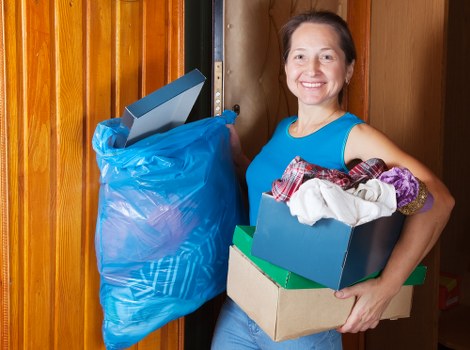 We invest in staff training and equipment for manual deconstruction and material salvage. Strip-out techniques allow us to separate fixings, brassware, joinery and reusable fixtures that would otherwise be crushed. These controlled deconstruction methods increase reuse rates and reduce the volume of mixed waste sent to residual processing.
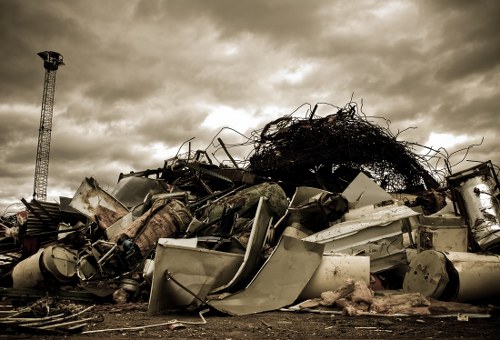 Flat-clearance sustainability is an ongoing programme of improvement ??? from our recycling percentage target and transfer station partnerships to charity routes and low-carbon vans. By combining careful on-site sorting, collaboration with borough waste systems and investment in a greener fleet, we aim to deliver clean, responsible clearances that put materials back to productive use and cut environmental impact.
Whether the work is a one-off flat clearance, an estate-wide clear-out or an apartment removal with salvage potential, our processes prioritise reuse and recycling first, recovery second and landfill only as a last resort. We continue to refine targets, expand charity networks and adopt newer low-emission vehicles so our clearance services contribute positively to local circular economy initiatives.
Our commitment is simple: clear flats, protect communities, and keep resources in the loop. Strong partnerships, transparent reporting and a low-carbon operational model mean our flat-clearance and apartment-clearance work supports both local borough waste strategies and larger sustainability goals.