Health and Safety Policy for Flat Clearance Operations
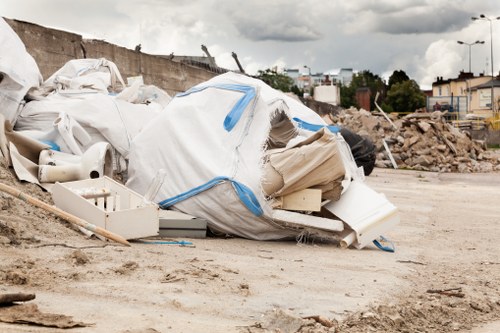 This Health and Safety policy outlines the essential standards and operational principles for safe flat clearance work. It applies to any team performing residential flat clearance, apartment clearance, or flat clearing service activities where there is handling, removal and transfer of goods, furniture, fixtures and waste. The aim is to protect employees, contractors, residents and visitors by reducing the likelihood of injury, ill health and environmental harm. This policy establishes responsibilities, mandatory controls and procedures that support a safe method of work for clearance activities irrespective of property type.
Policy scope and commitment
Our organisation is committed to maintaining safe flat clearance practices and complies with good health and safety management. The policy covers planning, on-site risk assessment, use of appropriate lifting equipment, manual handling controls and safe vehicle loading. Management will provide the necessary resources, training and supervision so that staff and subcontractors understand their roles. We require all operatives to observe site-specific instructions and to report hazards without delay. This commitment extends to ongoing monitoring, periodic review and refinement of the flat clearance safety program.
Risk assessment, planning and safe systems
Before any apartment clearance or flat-clearance job begins, a formal risk assessment must be completed. The assessment will identify hazards such as sharps, asbestos suspects, biohazardous waste, unstable furniture, trip and fall risks, and access constraints. Controls will be documented and may include:- Safe access and egress procedures;
- Use of mechanical aids including trolleys and hoists;
- Personal protective equipment (PPE) standards;
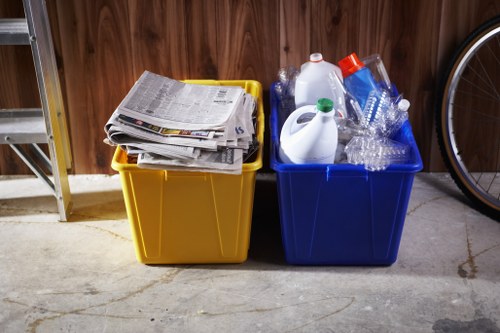
- Segregation of bulky waste and recyclable items.
Safe handling and manual handling controls are key in any removal operation. Operatives must follow manual handling techniques, work in teams for heavy or awkward items and make use of lifting aids wherever practicable. For particularly heavy loads or confined stairways, a mechanical removal plan or external lifting provision should be considered. The organisation will provide training in safe handling and will require regular competency checks. Documentation of training, risk controls and any exemptions must be stored for review and audit.
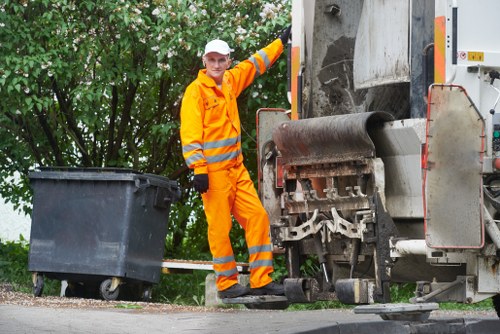 Hazardous and combustible materials require special controls during flat clearing tasks. Items such as paint, solvents, old batteries and gas cylinders must be identified, separated and transported in line with safe handling principles. When asbestos-containing materials are suspected, work must stop and a competent assessor engaged before any disturbance. Waste segregation for recycling and disposal will be followed to minimise environmental impact and to prevent cross-contamination of general household waste streams.
All operatives must wear specified PPE appropriate to the task. Typical PPE may include gloves, safety footwear, high-visibility clothing, eye protection and respiratory protection when dust or airborne contaminants are expected. PPE must be maintained in good condition and replaced when necessary. Strong adherence to PPE use is required and non-compliance will be addressed through supervision and retraining.
 Emergency procedures, first aid and incident reporting form an essential component of this safety policy. Teams must be briefed on site-specific emergency assembly points, access for emergency services and the location of first aid kits. Any incident, near miss or unsafe condition must be reported immediately and recorded. Investigation outcomes will feed back into revised risk assessments and improved procedures.
Contractor and occupant interactions must be managed professionally to protect everyone on site. When working in occupied properties, staff should minimise disruption, establish agreed exclusion zones and ensure that residents understand the scope of the clearance task. Insurance, permits and any necessary consents should be verified before starting work. Regular inspections and safety walkarounds will ensure controls remain effective throughout the operation.
 Monitoring, review and continuous improvement close the loop on safety performance for any flat clearance or residential clearance programme. Management will undertake regular audits, review incident trends and ensure that lessons learned are embedded into training and procedures. Records of risk assessments, training, inspections and incident investigations will be retained in order to demonstrate compliance and to support ongoing improvement. This policy will be reviewed at least annually or whenever there is a significant change to work methods, equipment or legislation.
Responsibilities: Managers are responsible for implementation and provision of resources; supervisors for ensuring compliance on site; and all operatives must follow procedures and report hazards. By maintaining these standards, the organisation reduces risk, protects health, and promotes a safe working culture across all flat clearance activities.
Values: Safety-first decision making, transparency in reporting, and continuous training underpin our approach to flat removal and flat clearance services. Through clear leadership and active participation by every team member we will deliver safe, efficient and respectful clearance operations.
Review: This policy is a living document and will be updated to reflect operational feedback and evolving best practice. Effective implementation relies on shared responsibility, proper planning and a commitment to safe working for every job, large or small.