Insurance and Safety for Flat Clearance Services
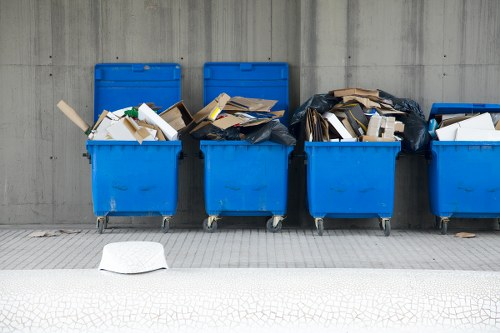 Flat clearance and apartment clearance operations require meticulous planning and a firm commitment to safety. This page outlines our approach to public liability insurance, staff training, personal protective equipment, and the risk assessment process for domestic and commercial flat clearance projects. Whether you engage a local flat clearance company or professional clearance contractors, understanding these safeguards helps protect residents, workers and property owners throughout the clearance.
Our public liability cover is a central part of any responsible flat clearance services policy. It provides financial protection for third-party injury and property damage that may occur during a clearance. The purpose of this insurance is to ensure that if an accident happens on-site, the costs of any claims, legal fees and potential reparations are handled without placing undue strain on clients or staff. We maintain comprehensive policies that reflect the scale and complexity of each job.

Public Liability Insurance Explained
Public liability insurance for a flat clearance contractor should be clear, current and commensurate with the size of tasks undertaken. Coverage typically includes incidents arising from dropped items, accidental damage when moving bulky furniture, and slips or trips caused by debris. Flat clearances that involve multiple trades or sub-contractors will often need higher limits to cover joint exposures. We ensure all operational insurance certificates are validated and reviewed regularly as part of our safety governance.Staff competence is equally vital. All team members engaged in apartment clearance are given structured training that combines classroom learning with on-site mentoring. Training covers manual handling techniques, correct dismantling procedures for fixtures, safe lifting practices and how to operate basic equipment. We emphasise the importance of hazard recognition and encourage staff to report any unsafe condition immediately to the site supervisor.

Ongoing Training and Certification
Our training matrix includes induction, refresher sessions and task-specific instruction for activities such as stairway moves, handling of sharp objects and dealing with hazardous wastes. Records of all training are maintained and audited to ensure currency. Flat clearance teams are regularly assessed against performance standards so that quality and safety are never compromised.Personal protective equipment (PPE) forms a practical layer of protection. For clearance jobs our standard PPE list includes high-visibility clothing, safety gloves, steel toe-capped boots, eye protection and dust masks or respirators where airborne particles are present. The precise combination of equipment is determined by the risk assessment and job profile. Flat clearance companies should always provide PPE that meets relevant safety standards.
Typical PPE items used for flat clearance work are listed below:
- High-visibility jackets or vests for team visibility in shared access areas
- Heavy-duty gloves for handling glass, metal and splinter-prone materials
- Safety footwear with reinforced toes and anti-slip soles
- Respiratory protection such as disposable or reusable masks for dusty environments
- Eye protection and face shields when cutting, sawing or breaking materials
![A row of black and orange rubbish bags filled with waste material, lined up along the edge of a residential street, likely awaiting collection. The bags are piled on the pavement next to a green wheeled bin, with some bags leaning slightly to the side. Behind the bags, there is a background of suburban houses with light-colored exteriors, multi-pane windows, and gabled roofs, indicating a typical UK neighbourhood. The street is bordered by trees with green foliage, and cars are visible parked along the driveways. The scene is captured during daylight, with natural light illuminating the area evenly, emphasizing the textures and colours of the bags and surroundings. This image illustrates typical rubbish disposal in a residential area, relevant to waste management services such as those offered by Flat Clearance, based near [POSTCODE] in [TOWN], ensuring proper rubbish removal and clearance solutions are provided for local clients.](/pub/_photos/rubbish/f1390626816.jpg) Risk assessment is the systematic process that underpins every safe flat clearance operation. Before work begins, a competent assessor surveys the property to identify hazards such as asbestos, fragile flooring, restricted access, vermin, or biohazards. Each hazard is evaluated for likelihood and severity, and control measures are assigned to mitigate risk. These assessments are documented and made available to the clearance team.
Risk assessment is the systematic process that underpins every safe flat clearance operation. Before work begins, a competent assessor surveys the property to identify hazards such as asbestos, fragile flooring, restricted access, vermin, or biohazards. Each hazard is evaluated for likelihood and severity, and control measures are assigned to mitigate risk. These assessments are documented and made available to the clearance team.
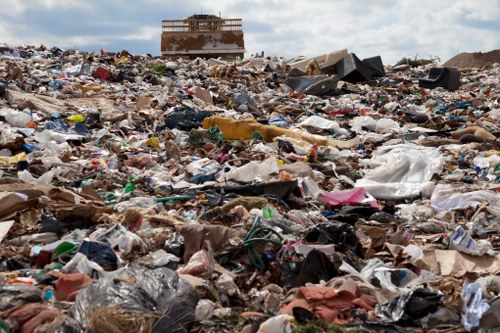 Risk Control and Method Statements - The assessment outcomes feed into a written method statement which describes how the job will be carried out safely. Method statements set out the sequence of work, required equipment, emergency procedures and the responsibilities of each team member. They form part of a continuous improvement cycle: after completion, the job is reviewed and lessons learned are captured to refine future assessments.
In summary, a professional approach to insurance and safety in flat clearance combines adequate public liability insurance, structured and ongoing staff training, appropriate and certified PPE, and a robust risk assessment process with clear method statements. This layered approach reduces the likelihood of accidents and ensures that when incidents do occur, they are managed effectively and ethically. When selecting a flat clearance provider, ask about their insurance levels, training records, PPE standards and how they document risk assessments???these are the practical indicators of a safety-conscious clearance partner.
Safety and compliance are not optional extras; they are integral parts of responsible flat clearance and property removal services.