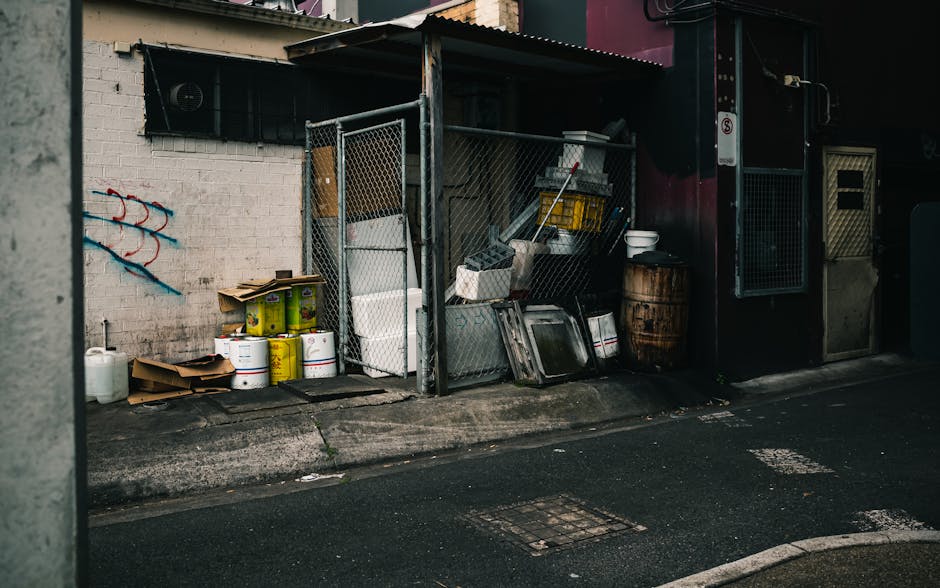
Professional Rubbish Clearing: Techniques for Quick Turnarounds
If you need a space cleared quickly, professionally, and without the usual stress, you are in the right place. Professional Rubbish Clearing: Techniques for Quick Turnarounds is really about more than "taking the junk away". It is about speed, coordination, safety, sorting, and making sure the job is done properly the first time. Whether you are clearing a flat after a tenancy, dealing with builder's waste, or trying to get a cluttered garage back under control, the difference between a slow clear and a fast one usually comes down to method.
In our experience, the quickest jobs are rarely the simplest-looking ones. They are the ones where the team arrives with a plan, the right vehicle, enough hands, and a decent understanding of what can be reused, recycled, or separated on site. That is what this guide covers: how fast turnarounds actually happen, what good professional clearing looks like, and how to avoid the little delays that turn a one-hour job into an all-day headache.
It's not magic. It's process.
And when you understand the process, you can choose a service more confidently, prepare better, and keep the whole thing moving.
Table of Contents
- Why Quick Professional Rubbish Clearing Matters
- How Professional Rubbish Clearing Works
- Key Benefits and Practical Advantages
- Who This Is For and When It Makes Sense
- Step-by-Step Guidance
- Expert Tips for Better Results
- Common Mistakes to Avoid
- Tools, Resources and Recommendations
- Law, Compliance, Standards, or Best Practice
- Options, Methods, or Comparison Table
- Case Study or Real-World Example
- Practical Checklist
- Conclusion
- Frequently Asked Questions
Why Professional Rubbish Clearing: Techniques for Quick Turnarounds Matters
When rubbish builds up, time becomes the real problem. A room full of unwanted furniture blocks trades, slows moving day, complicates cleaning, and can make a property feel much worse than it really is. Quick turnarounds matter because most people are not just trying to remove waste. They are trying to unlock the next step: a sale, a letting, a refurbishment, a delivery, or simply a bit of breathing space.
That is especially true in London and other busy UK areas where access is tight, parking is awkward, and schedules are already packed. If a crew can clear a property in a single visit, you save time and, often, a fair amount of hassle. Less back and forth. Fewer interruptions. A lot less dust in the air, too.
There is also a trust element. A professional team that works fast but carelessly can create damage, leave mess behind, or miss recyclable materials. Fast should never mean sloppy. Good rubbish clearing balances pace with judgement, and that balance is what sets the better operators apart.
Expert summary: the quickest rubbish clearances are usually the most organised ones. The work may look physical, but the real advantage comes from planning, sorting, access control, and loading in the right order.
Let's face it, nobody enjoys watching a pile of old furniture sit in the hallway for another week while arrangements are made. If the timeline matters, technique matters too.
How Professional Rubbish Clearing: Techniques for Quick Turnarounds Works
At a practical level, quick-turnaround rubbish clearing follows a simple pattern: assess, sort, remove, and finish. The detail is where the speed comes from. A good team will arrive knowing what they are likely to encounter and how to move it with as few wasted steps as possible.
1. Rapid assessment on arrival
The first few minutes matter. A team should identify access points, staircases, lift use, fragile items, heavy loads, and anything that needs special handling. A cramped third-floor flat, for example, needs a very different approach from a front-drive garage clearance. One quick look can tell you whether items should be moved in a certain order, whether a second person is needed at a choke point, and where the vehicle should be positioned.
2. Segregation by type
Sorting on site saves time later. In practice, this means separating bulky household items, green waste, electricals, builder's waste, and general mixed rubbish before loading if that improves processing. Not every job needs perfect sorting on the spot, but a sensible split can make disposal more efficient and reduce unnecessary handling.
3. Load planning
Loading is not just "throw it in the van". The best crews load heavy, awkward items first, then build around them with lighter material and bags. That reduces movement in transit and maximises vehicle space. If you have ever watched a mattress, a sofa, and a dozen bags somehow fit neatly into one load, that is planned loading at work.
4. Safe movement through the property
Quick does not mean rushing down stairs with a wardrobe like some sort of weekend game show. Protective lifting methods, clear walkways, and the right number of staff prevent accidents and delays. A dropped item can damage floors, walls, or banisters and slow everything down. Good teams move decisively, but not recklessly.
5. Final sweep and check
The turnaround only feels quick if the finish is clean. A proper final check catches missed debris, screws, packaging, dust, and forgotten items. That last sweep often separates a genuinely professional clearance from a merely fast one.
For bigger jobs such as house clearance, office clearance, or builders waste clearance, the process becomes more structured, but the same principles apply: reduce friction, manage access, and keep the team moving in a logical sequence.
Key Benefits and Practical Advantages
There are obvious benefits to clearing rubbish quickly, but the less obvious ones are often the most valuable.
- Faster handover of the property: useful when you are letting, selling, renovating, or moving out.
- Less disruption: one visit is usually easier on neighbours, staff, or family members than multiple trips.
- Reduced safety risks: clutter creates trip hazards, blocked exits, and hidden sharp objects.
- Better use of space: cleared rooms are easier to clean, measure, repair, and photograph.
- Lower stress: a swift, organised clearance removes the nagging background pressure that clutter creates.
- Better recycling outcomes: sorted material is often easier to divert from general waste.
There is also a very practical advantage many people overlook: quick turnarounds can reduce the chance of a problem spreading. A damp cardboard pile, a broken appliance, or old furniture left in a warm room can become more unpleasant over time. Best not to let it sit.
For homeowners and landlords, speed matters because empty properties can't be used properly until the rubbish is gone. For businesses, the goal is often continuity. A cluttered back room, stock area, or office floor can interrupt work in a way that feels small at first and then suddenly becomes quite annoying.
Who This Is For and When It Makes Sense
Professional rubbish clearing with a fast turnaround is not only for emergency jobs. It suits anyone who needs a practical, predictable result without spending days managing the process themselves.
Homeowners and renters
If you are moving out, preparing for a refurbishment, or reclaiming a spare room, a fast clearance can save the week. Think of the typical situation: boxes in the hallway, an old sofa that nobody wants, and a garden full of things that were "temporarily" stored there two summers ago.
Landlords and letting agents
Quick clearance can help between tenancies, after a tenant leaves items behind, or when a property needs to be made presentable for viewings. The main value here is momentum. The sooner a property is cleared, the sooner cleaning, repairs, and re-listing can begin.
Trades and refurb teams
Builders, decorators, and renovators often need waste moved off-site quickly to keep the job on schedule. If skips are awkward or space is tight, a rapid collection service may be more efficient. That is especially true for mixed loads where waste is already bagged or stacked.
Businesses and offices
Office moves, fit-outs, archiving clear-outs, and storage room tidy-ups often need timing precision. Business waste removal needs to be fast enough to avoid downtime, but careful enough to deal with paperwork, equipment, and any items that may need secure handling.
Sometimes the call is obvious. Sometimes it sneaks up on you. One Friday afternoon you notice the office is half full of broken chairs and unused screens, and by Monday the place needs to function again. Happens all the time.
In cases involving bulky furniture, you may also want to compare related services such as furniture clearance, sofa removal, or mattress disposal depending on what actually needs shifting.
Step-by-Step Guidance
If you want a quick turnaround, preparation matters almost as much as the collection itself. Here is the approach that tends to work best.
- Walk the space first. Make a simple note of what must go, what must stay, and anything that needs special handling.
- Group items by type. Put furniture together, bag loose waste, and separate electricals if possible. It does not need to be perfect, just sensible.
- Clear access routes. Move smaller objects from hallways, doors, and stairs. If the team can get in and out cleanly, the job will move much faster.
- Check for restrictions. Look for parking issues, narrow entrances, lift bookings, or building rules that might affect timing.
- Identify heavy or awkward items. Wardrobes, white goods, bed frames, and broken cabinets should be flagged early so the crew can bring the right equipment.
- Confirm disposal preferences. If you care about recycling, reuse, or donation routes, mention that before the work begins.
- Stay available for quick decisions. A fast job can stall if nobody is there to answer one simple question about an item that is boxed and unlabeled.
- Do a final inspection. Check corners, loft access, under stairs, and outside spaces before the team leaves.
A tiny detail can save a lot of time. For example, if you know a shed contains mixed waste, opening it in advance and stacking things by category can shave minutes off the visit and make the whole thing feel smoother. Simple, but effective.
Expert Tips for Better Results
Good rubbish clearing is partly physical work and partly choreography. That sounds a bit grand, but honestly, it is true.
Use the "top layer first" approach where it helps
If a room is stacked floor to ceiling with mixed items, removing the top or most accessible layer first can create space to move safely. The aim is to open the route without causing a second collapse of clutter. Seen that happen, and it's not fun.
Keep fragile and heavy items separate
Glass, mirrors, ceramics, and electronics should not be buried under dense bags or furniture. Separation reduces breakage and makes loading faster because the team is not constantly stopping to protect delicate items.
Book the right capacity
A single person and a small vehicle may be fine for a light load. A packed flat clearance, less so. Underestimating volume is one of the fastest ways to lose the quick turnaround you were aiming for. Better to be realistic than optimistic.
Choose timing carefully
Early slots can help avoid traffic and give you more flexibility if the job is larger than expected. In some parts of London, that can make a surprising difference. A 7:30 a.m. arrival may sound a little brutal, but it often gets the day off to a clean start.
Ask about sorting and recycling before collection
If recycling is important to you, ask how the provider handles separation. Many clearances can be made more efficient when items like metal, wood, cardboard, and white goods are identified in advance.
Keep decision-making simple on the day
If possible, label "keep", "clear", and "unsure" areas before the team arrives. A few sticky notes can be strangely powerful. Less debate, less delay.
For sustainable disposal planning, it can also help to review a provider's approach to recycling and sustainability and their broader waste disposal process so you know what to expect.
Common Mistakes to Avoid
Most delays in rubbish clearing are avoidable. The tricky part is that they often feel small at the time.
- Leaving everything mixed together: if the crew must sort through unrelated items one by one, the job slows down.
- Blocking access routes: a clear hallway is worth more than people think.
- Underestimating heavy items: one old wardrobe or American-style fridge can change the whole plan.
- Forgetting parking or access restrictions: this is especially common in flats and busy streets.
- Not flagging hazardous materials: some items need specialist handling and should never be treated as ordinary waste.
- Assuming all waste can be handled the same way: bulky household items, builder's waste, and electricals are different jobs.
- Choosing on price alone: the cheapest quote can be expensive if it causes delays, add-ons, or incomplete clearance.
Another common one: people prepare the inside of the property beautifully, then forget the front gate is locked or the loading bay is booked. It happens. More often than you'd think.
Tools, Resources and Recommendations
You do not need a warehouse full of equipment for a quick clearance, but the right kit makes a real difference.
Useful equipment
- Sack barrows and dollies: useful for heavy items and reducing manual strain.
- Protective gloves and footwear: essential for safe handling and grip.
- Straps and lifting aids: helpful for awkward items such as wardrobes, white goods, and mattresses.
- Dust sheets and floor protection: useful when moving bulky items through occupied spaces.
- Clear sacks and labels: simple, but very good for quick sorting.
Practical planning resources
A basic room-by-room list, a simple floor plan, or even a few phone photos can help a clearance team estimate workload properly before arriving. For larger jobs, photos of staircases, entrances, and parking access are especially useful. The more a provider understands before arrival, the fewer surprises there are on site. And surprises, in this line of work, usually eat time.
If the job relates to a wider property clear-out, these pages may also be relevant depending on what you need removed: garage clearance, loft clearance, garden clearance, and bulk waste collection.
Law, Compliance, Standards, or Best Practice
Rubbish clearing is not just about speed. In the UK, it also has to be handled responsibly. While the exact obligations can vary depending on the type of waste and the circumstances, a professional service should work with safe handling, lawful disposal routes, and appropriate insurance. That is the baseline, really.
For example, electrical items, fridges, mattresses, and certain commercial loads may need specific treatment or segregation. Builders' waste can also be different from household clutter in terms of processing. If anything looks hazardous, contaminated, or unusual, it should be assessed carefully rather than treated as ordinary rubbish.
Good practice also means keeping clear records of what has been collected and where it is going, especially for business clients. If you are hiring a provider, it is reasonable to ask whether they are insured, how they handle waste transfer, and how they approach recycling. Those are fair questions. Sensible ones, actually.
Flat Clearance operates with safety and transparency in mind, and pages such as health and safety policy, insurance and safety, and terms and conditions can help you understand the general standards a reputable provider should make available.
For pricing expectations, it is best to treat any quote as job-specific rather than assume a fixed rate. Access, volume, item type, loading difficulty, and disposal route all affect the final price. That's normal.
Options, Methods, or Comparison Table
Different jobs call for different methods. A quick comparison can help you choose what is most sensible for your situation.
| Method | Best for | Speed | Strengths | Possible drawbacks |
|---|---|---|---|---|
| Professional rubbish clearing | Mixed loads, bulky items, urgent clearances | Fast | Minimal effort for you, flexible, efficient on-site handling | Cost depends on access, volume, and item type |
| Council collection | Selected large items or scheduled local services | Moderate | Can be useful for simple, known items | May have waiting times, item limits, or booking restrictions |
| Skip hire | Projects where waste will be generated over time | Moderate | Handy for ongoing DIY or renovation work | Requires space, loading effort, and permits in some cases |
| Self-haul to disposal site | Small loads and available transport | Variable | Can be cost-conscious if you already have a vehicle | Time-consuming, physically demanding, and not ideal for bulky items |
If you are deciding between clearance options, ask yourself one simple question: do you want to handle the lifting, the sorting, the transport, and the disposal checks yourself? If the answer is no, professional clearance usually wins on time alone.
For specific item-based jobs, you might also compare furniture disposal, bed disposal, or fridge disposal where relevant.
Case Study or Real-World Example
Here is a realistic example from the kind of job many people face. A one-bedroom flat in a busy part of London needs clearing after a tenant move-out. The property contains a broken bed base, a sofa, several bags of mixed household rubbish, a chest of drawers, and a fridge in the kitchen. The landlord wants the place ready for a cleaner and decorator the next day.
The fastest outcome usually comes from a few simple moves: the client sends photos before the visit, access is checked in advance, the team arrives with enough hands for the stairs, and the items are moved in a logical order. Heavy items go first. Loose bags are stacked by the door. The fridge is handled separately. A final sweep is done before leaving.
What made the difference was not some secret trick. It was preparation and sequence. Because the clearance was planned properly, the room was emptied in one visit rather than dragged out over two. The decorator could start on time. The landlord was not chasing three separate appointments. Everyone gets on with their day. Lovely, really.
That is the sort of result people usually want from flat clearance, home clearance, or rubbish clearance when speed matters most.
Practical Checklist
Use this checklist before the team arrives. It will usually save time, and sometimes money too.
- Identify everything that needs to go.
- Separate items you want to keep from items to remove.
- Move small obstacles out of hallways, landings, and doorways.
- Take quick photos of any awkward items or access points.
- Check parking, lift access, or loading restrictions.
- Flag any heavy, fragile, or unusual items in advance.
- Confirm whether recycling or reuse is important to you.
- Make sure someone is available to answer questions on the day.
- Do a final room-by-room sweep before the crew leaves.
- Keep keys, codes, or building permissions ready if needed.
It is a small thing, but a tidy start often leads to a tidy finish. Funny how that works.
Conclusion
Professional rubbish clearing works best when speed is built into the method, not rushed at the end. If the team plans access, sorts the load properly, uses the right equipment, and finishes with a proper check, you get the quick turnaround you were hoping for without sacrificing safety or quality.
For homeowners, landlords, trades, and businesses, that means less disruption and a cleaner reset. For anyone staring at a room that has become a bit too full, it also means relief. Quiet relief, usually. The good kind.
When you are ready to move from "I should sort that out" to "it's actually done", the smartest step is to choose a provider that is clear about process, safety, and disposal standards from the start.
Get a free quote today and see how much you can save.
Frequently Asked Questions
What counts as professional rubbish clearing?
Professional rubbish clearing is a managed service where unwanted items are assessed, loaded, transported, and disposed of properly by trained staff. It can cover household clutter, bulky furniture, builder's waste, office items, garden waste, and mixed rubbish depending on the provider.
How do quick turnarounds actually happen?
Quick turnarounds usually come from good planning: clear access, accurate volume estimates, enough staff, the right vehicle, and sensible loading order. The speed comes from reducing delays before the team even starts lifting.
Is professional rubbish clearing faster than skip hire?
Often, yes, especially for bulky items or mixed waste. With professional clearing, you do not need to load the waste yourself or organise a skip permit in many cases. That can make it much faster for a one-off job.
Can I get same-day rubbish clearance?
Sometimes, yes, if the provider has availability and the job is straightforward enough. Same-day service is more realistic when access is easy, the volume is known, and there are no special disposal complications.
What information should I give before booking?
Photos, item lists, floor level, parking details, and any access restrictions are the most useful details. If you mention heavy items, fragile items, or anything unusual, it helps the team prepare properly.
Do I need to sort the rubbish before the crew arrives?
Not always, but a little sorting helps a lot. Grouping similar items together and separating keep items from clear-out items makes the job quicker and often smoother on the day.
How is bulky furniture handled safely?
Bulky furniture is usually moved using two-person lifts, carrying aids, protective equipment, and a planned route through the property. Safe handling matters just as much as speed, especially on stairs or in tight hallways.
Can rubbish clearing include electrical items and white goods?
Yes, many clearance jobs include electricals and appliances, but these should be identified in advance. Items like fridges, freezers, and other white goods may need separate handling or processing.
Is professional rubbish clearing suitable for businesses?
Yes. It is often a good fit for office clearances, stock room clean-outs, refurbishment waste, and move-outs where time is tight. Business clients usually value predictable timing and minimal disruption.
How do I know if a quote is fair?
A fair quote should reflect the amount of waste, the type of items, access difficulty, labour required, and disposal needs. Be cautious if a price seems very low but comes with vague terms or missing details.
What happens if some items are not clear on the day?
Good providers will usually ask before removing anything uncertain. If you are not sure, label the item or set it aside. That avoids mistakes and keeps the turnaround moving without drama.
Can rubbish clearing help with recycling?
Yes, it often can. A well-run clearance service will separate reusable or recyclable items where possible rather than treating everything as mixed waste. That is better for the environment and usually a sign of a careful operator.
For local support across the city, you can also explore our London coverage areas such as London, Central London, North London, West London, East London, and South West London.
Sometimes the fastest way forward is simply getting the right people in early and letting them do the heavy lifting properly. That small decision can make the whole week feel lighter.